Leadership Now Workshops

In addition to our comprehensive programmes, we offer a range of learning experiences to address key challenges facing today’s managers and leaders.

COACHING SKILLS FOR LEADERS

Compelling research tells us that excellence in coaching is emerging as a critical differentiator for effective leaders, helping them develop high performing teams to transform business results.


This course is designed for anyone wanting to learn about the value of coaching within the context of their management or leadership role and to develop the skills and tools needed for effective and powerful coaching conversations.

DELIVERING THROUGH OTHERS

This learning experience is focussed on the key skills of motivation and delegation. Delegates will have the opportunity to work on how best to engage others in tasks in a manner that unlocks discretionary effort and leads to great performance.


Using Verosa’s 6-step delegation model, participants will have the opportunity of working on their own ‘to do’ lists, exploring what stops them from delegating and what successful – and motivational - delegation really looks like.


LEADING TRANSITION AND TRANSFORMATION 

Change is a constant in all of our lives. All around us, technologies, processes, people, ideas and methodologies change, impacting the way we work and perform our daily tasks. 


This course is aimed at managers and leaders who need to deliver change effectively as part of their leadership role. The course explores how change happens, the psychology of change and what makes change initiatives successful.


Working on their live examples, participants will discover the key skills involved in leading effective change and create action plans that can be applied to their real-life, organisational challenges.

LEADING THROUGH UNCERTAINTY 

AND CRISIS

Today’s VUCA (volatile, uncertain, complex and ambiguous) world, needs leaders with the skills, mindset and agility to navigate challenging and highly turbulent times.


This workshop draws on the foremost thinking in crisis leadership, whether that is from the military arena, corporate finance, or those on the front line of global health emergencies.


Delegates will learn how the brain responds to pressure, and will develop the practices to lead effectively through times of and crisis using tools and techniques to support themselves and others.

Best three hours of my life…. The facilitators were excellent and I have come away with techniques I can implement straight away.

Neil Goudie, Industrial Emissions Regulatory Specialist, Environment Agency

MANAGING REMOTE AND HYBRID 

TEAMS

Managing remote teams and hybrid teams is a reality for most managers and leaders in the post-COVID19 world. What does this way of operating demand from leaders and how can we get the best from our people from afar?


Participants will be led through a tailored learning experience that addresses the key areas of clarity, communication and connection in a digital world, with a focus on building trust remotely, delivering outcomes and the creation of a successful and effective virtual team operating capability.


PROJECT MANAGEMENT FOR LEADERS

We live in a world of projects. From the largest national infrastructure projects to the smallest home renovation task, our world is built upon packages of work that need to be completed within a certain time, within a certain budget and to a certain quality.


Organisations increasingly require those in leadership roles to be equipped to deliver projects successfully that will enable the business to adapt, grow and achieve strategic objectives.


This course provides an essential overview for leaders of the core skills required to deliver small to medium size projects and initiatives successfully in an increasingly remote or hybrid working environment.

STRATEGIC PLANNING FOR LEADERS

Being able to define, communicate and implement a strategy is a key leadership skill and never more so than in the current context. This training is aimed at participants who want practical strategies, tools and techniques to think both creatively and strategically for themselves, their teams and their organisations.


This learning experience is an opportunity to ‘helicopter out’ of day- to-day operations and begin the journey towards a successful future – whatever the destination.


Using a tried and tested consultative framework, delegates will work through a series of exercises to support them as they visualise, analyse and implement strategy.

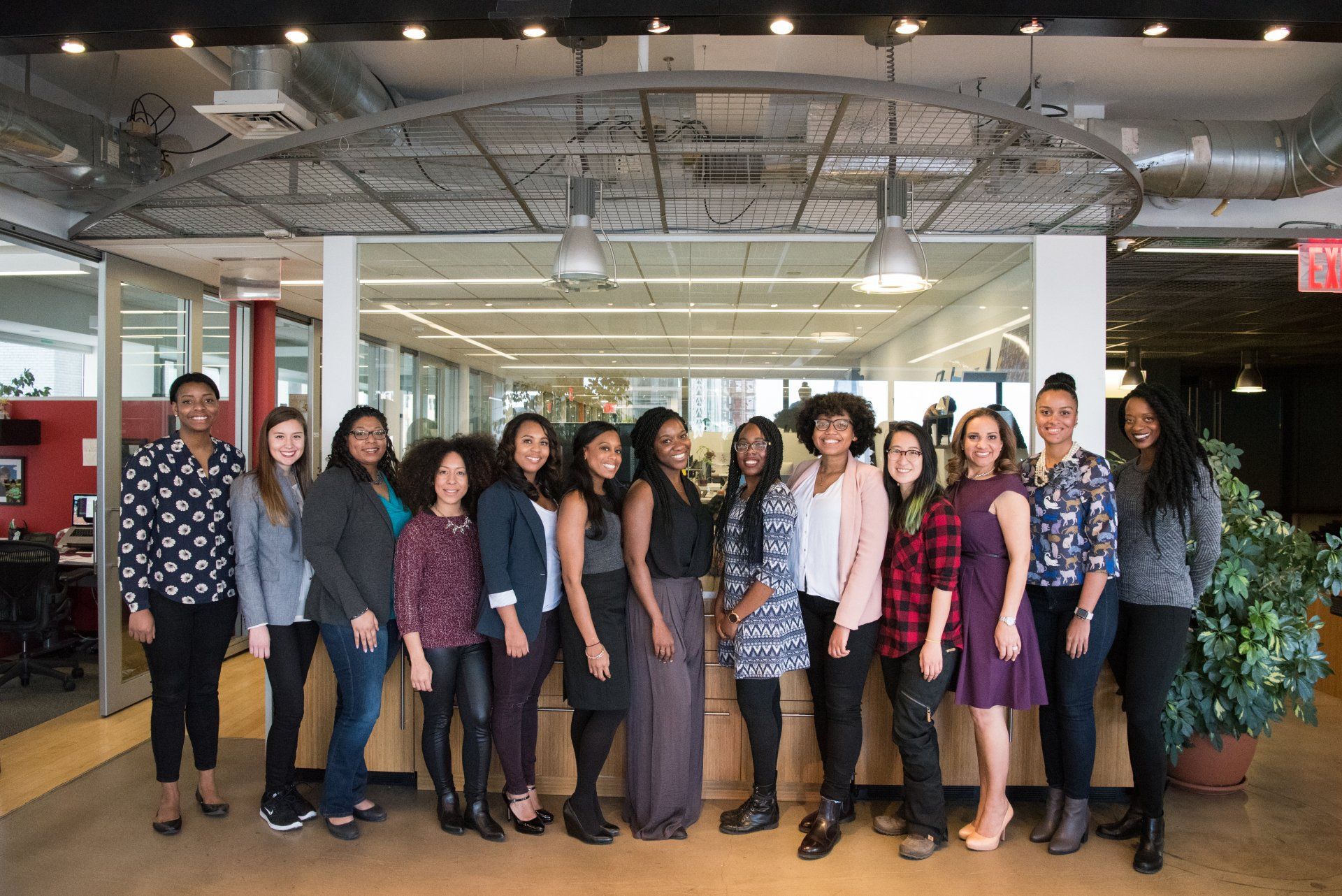
TALENT MASTER

In today’s employment market, organisations have to work harder than ever to attract great people, make the most of their abilities and keep them. The cost of unwanted attrition runs into billions for UK organisations.


The ability to source, develop and retain talent is an increasingly crucial skill for managers and leaders and often one that gets overlooked. We explore the new psychological contract between employee and employer, as well as the mindset and practical tools needed to unlock the potential in others.

Most in-house programmes include elements of our Interpersonal and Communication Skills training. 

LEARN MORE HERE

CASE STUDY:

Iris Software Group - Leadership Programme 


This large-scale management and leadership training programme for a geographically diverse technology company, was commissioned to upskill Middle Managers and Senior Leaders across the organisation and to support better performance, increased employee engagement levels and talent development.


Verosa worked closely with our client partners to conduct an in-depth needs analysis across the business, identifying skills, knowledge and behavioural gaps and challenges.

READ THE FULL CASE STUDY

Related Articles

10 June 2026
Summer has a habit of disrupting good intentions. Diaries become fragmented, annual leave takes priority and development plans that began the year with momentum are quietly pushed into September. It’s an understandable response. When teams are managing workloads, covering holidays and keeping the business moving, leadership development can feel like something that can wait. But momentum is far easier to maintain than it is to rebuild. And summer may be one of the most overlooked opportunities for meaningful development. Without the pace and pressure that often define the rest of the year, leaders can find themselves with something that is usually in short supply: space to think. Space to reflect on what’s working, what’s not and where they need to grow. Space to have the conversations that get postponed when everyone is moving at full speed. That is often where meaningful development begins. We see it all the time. A leader enters the summer months knowing they need to have a difficult conversation, build stronger relationships with stakeholders or step more confidently into their role. The intention is there, but the summer hiatus takes over. Before they know it, September has arrived and the challenge has not gone away – it has simply been carried forward. Development rarely stalls because people do not care about it. More often, it stalls because it feels easier to postpone than prioritise. The irony is that summer can provide exactly the conditions leaders need to make progress. With fewer competing demands and a little more headspace, there is an opportunity to step back, gain perspective and focus on the habits, behaviours and skills that often get overlooked during busier periods. The risk of putting everything on hold until September is that the challenges do not wait. Teams still need direction. Difficult conversations still need to happen. Change still needs to be led. By the time autumn arrives, many organisations are trying to restart development activity while also preparing for year-end priorities and looking ahead to the next financial year. Development becomes another item on an already crowded agenda. Organisations that maintain a focus on development throughout the summer often see a different outcome. Leaders return with greater clarity, renewed confidence and a stronger sense of direction. Rather than spending September rebuilding momentum, they are ready to build on it. Importantly, this does not require more pressure or more time away from the day job. In many cases, it is the smaller, more targeted interventions that create the greatest impact. The opportunity is not to do more. It is to create the right moments for development to continue. Perhaps that is the real challenge for organisations this summer. Not whether leadership development can wait until September, but whether it should. Because leadership is not seasonal. The demands leaders face do not disappear during the summer months, and neither does the opportunity to help them grow. Small, focused development opportunities can make a big difference. Explore our Summer of Strength initiative and see what is possible in the months ahead.
by Richard Hood 18 May 2026
Younger workers are sending organisations a message. Not abruptly, but steadily – and with increasing clarity. They want leadership that helps them feel anchored. They want to understand what good looks like. And they want to feel connected to someone who cares about their growth. Gallup’s recent findings show that many aren’t getting that. Engagement among younger employees has fallen and with it, their sense of being supported, understood and guided. Clarity of expectations, one of the most basic human needs at work, is now particularly blurry for employees under 35. When clarity fades, so does confidence. And when confidence fades, people start to look elsewhere. This isn’t a story about a ‘demanding generation’. It’s a story about a workforce navigating uncertainty and wanting leaders who help them make sense of it. Younger employees are more likely to feel detached from their managers and less likely to see a future in their roles. That detachment isn’t about ambition or impatience; it’s about a lack of connection and direction – two things that sit squarely within the gift of leadership. At the same time, leaders themselves are under strain. Manager engagement has dropped globally, especially among younger and female leaders. When leaders feel stretched thin, clarity is often the first thing to slip. Yet clarity is the very thing teams need most. Gallup’s research reminds us that leaders account for 70% of the variance in team engagement. That’s not pressure, it’s possibility. For organisations, this moment is an invitation. Not to add more frameworks or more noise, but to invest in leadership that communicates with intention, listens with care and creates the conditions for people to thrive. Clarity isn’t a process. It’s a practice. And when leaders offer it consistently, it becomes a quiet act of support – one that helps people feel grounded, valued and able to see a future for themselves. We believe clarity is one of the most human things a leader can offer. It’s how people find their footing. It’s how they grow. And in a changing world of work, it’s becoming the foundation of engagement, trust and long‑term commitment. If this resonates, it might be worth pausing to consider how clarity is showing up in your own organisation – in the conversations leaders are having, in the expectations people carry and in the experience younger workers are living every day. Sometimes the smallest shifts in how we lead can make the biggest difference in how people feel.

Talk to one of our experienced learning and development consultants about
your senior leadership challenges